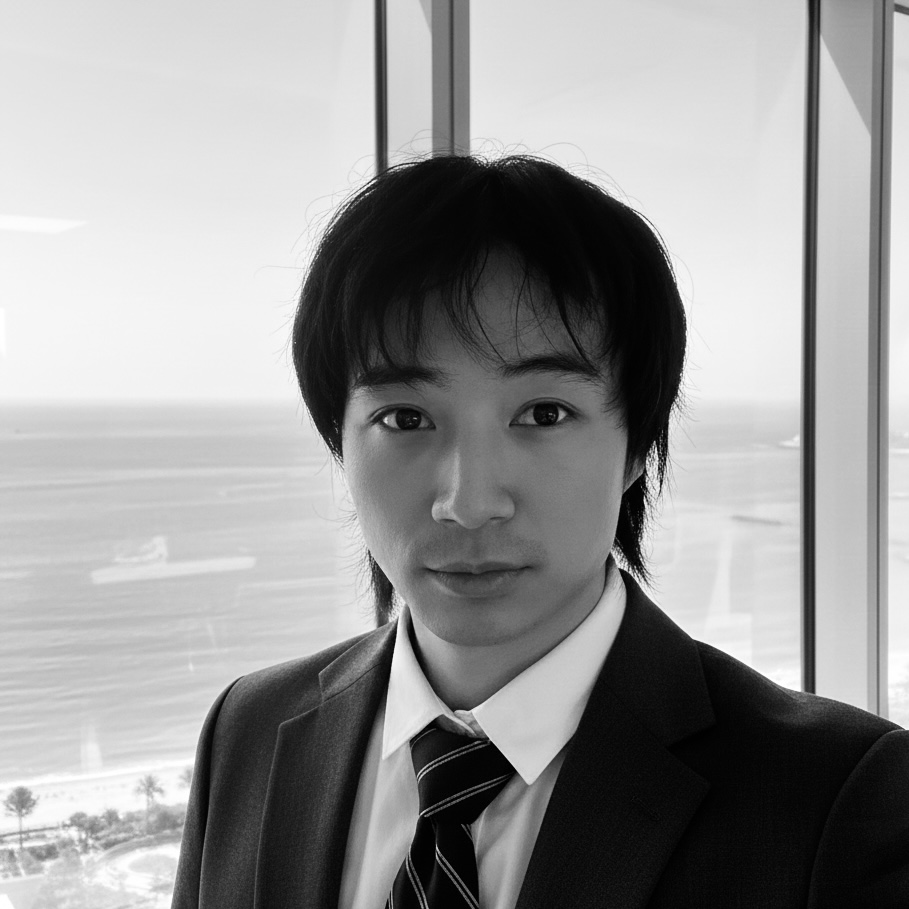
I am a Ph.D. student in Computer Science with research focused on quantum computing systems, advised by Dr. Yuan Xie. I started my Ph.D. at University of California, Santa Barbara in 2022 and transitioned to The Hong Kong University of Science and Technology with my advisor in 2024. Prior to this, I earned my M.S. in Electrical and Computer Engineering from The University of Arizona in 2022, and bachelor’s degrees (B.S. in Physics and B.E. in Computer Science) from University of Science and Technology of China in 2021. From 2021 to 2023, I was a student member of the NSF Center for Quantum Networks.
Newness from the old, the inexhaustible past.
如將不儘, 與古爲新. ——《二十四詩品》
My research is committed to a “More-than-More-than-Moore” approach in the CS community—advancing architectural support for robust quantum computer systems. As nowadays quantum computers increasingly scale up and we are entering the era of fault-tolerant quantum computing, I am particularly interested in exploring how to enhance the robustness and scalability of quantum computers, through relevant architecture design and compiler optimization grounded on mathematical and physical foundations. My recent work spans quantum instruction set architecture, compiler optimization, error correction decoding, quantum machine learning algorithms, and systematic error mitigation and suppression.
—— written in February, 2026
🔥 News
- 2026.11: (HPCA’27) BEACON has been accepted by HPCA 2027.
- 2026.10: (PPoPP’27) Symphony has been accepted by PPoPP 2027. [Code]
- 2026.07: (MICRO’26) GadIR has been accepted by MICRO 2026. [Code]
- 2026.03: (ISCA’26) Canopus has been accepted by ISCA 2026. [Code]
- 2026.03: Honored to be a DAC Young Fellow at DAC 2026.
- 2026.03: Received a Student Travel Grant for ASPLOS 2026.
- 2025.11: (ASPLOS’26) ReQISC has been accepted by ASPLOS 2026. [Artifact]
- 2025.11: (DATE’26) Auto-Stabilizer-Check has been accepted by DATE 2026. [Code]
- 2025.11: (DATE’26) SurgeQ has been accepted by DATE 2026.
- 2025.02: (DAC’25) PHOENIX has been accepted by DAC 2025. [Code]
- 2024.02: (Nano Letters’24) Selective Generation of V2 Silicon Vacancy Centers in 4H-Silicon Carbide has been published in Nano Letters.
- 2024: Transitioned to The Hong Kong University of Science and Technology with my advisor.
- 2023.06: Joined DAMO Academy, Alibaba Group as a Research Intern.
- 2023.06: Received an NSF Student Travel Grant for ICC 2023.
- 2023.05: (ICC’23) Reconfigurable Quantum Internet Service Provider has been published at ICC 2023. [Code]
- 2022: Started my Ph.D. in Computer Science at University of California, Santa Barbara.
📝 Publications
Selected Publications
Collaborative Publications
arXiv’26 Survey Quantum Compiler Design for Fault-Tolerant Quantum Computing. Chenghong Zhu, Jiahan Chen, Keming He, Hongshun Yao, Zhaohui Yang, Jin-Guo Liu, Anbang Wu, Xiaotong Ni, Xingsheng Luan, Zhuo Fu, Shenggen Zheng, Xin Wang. 2026, Preprint [pdf] [code]
arXiv’25 Survey Quantum Design Automation: Foundations, Challenges, and the Road Ahead. Feng Wu, Jingzhe Guo, Tian Xia, Linghang Kong, Fang Zhang, Ziang Wang, Aochu Dai, Ziyuan Wang, Zhaohui Yang, Hao Deng, Kai Zhang, Zhengfeng Ji, Yuan Feng, Hui-Hai Zhao, Jianxin Chen. 2025, Preprint [pdf]
arXiv’25 Survey Quantum Compiler Design for Qubit Mapping and Routing: A Cross-Architectural Survey of Superconducting, Trapped-Ion, and Neutral Atom Systems. Chenghong Zhu, Xian Wu, Zhaohui Yang, Jingbo Wang, Anbang Wu, Shenggen Zheng, Xin Wang. 2025, Preprint [pdf]
HPCA’27 Broadcast-Enabled AC-Window Compilation for All-Electronic Trapped-Ion Quantum Processors. Chenghong Zhu, Zhimu Yang, Jiahan Chen, Zhaohui Yang, Xiyao Feng, Jingbo Wang, Xin Wang. 2027, IEEE International Symposium on High-Performance Computer Architecture (HPCA)
arXiv’26 Lifting Connectivity Bottlenecks in Superconducting Quantum Processors via Enriched Native Two-Qubit Gates. Hanyi Wang, Jingzhe Guo, Lijun Sun, Zhaohui Yang, Weizhi Tao, Xingye Yuan, Qiankun Wang, Bihao Guo, Chunwang Liu, Rui Yang, Yang Li, Yu Fan, Jiasheng Hu, Junhe Wang, Shuyue Zheng, Shengbin Wang, Xinfang Zhang, Feng Wu, Hantao Sun, Jianxin Chen. 2026, Preprint [pdf]
MICRO’26 GadIR: A Spatial-Topology Preserving Compiler for Quantum Many-Body Systems Simulation. Xiangyu Ren, Yuexun Huang, Zhaohui Yang, Yuchen Zhu, Tsung-Wei Huang, Tsung-Yi Ho, Zhiding Liang, Antonio Barbalace. 2026, IEEE/ACM International Symposium on Microarchitecture (MICRO) [pdf] [code]
arXiv’26 Bunny Codes: Broadening Superconducting Quantum Error Correction Capability through Advanced Control Engineering. Runshi Zhou, Xingye Yuan, Linghang Kong, Fang Zhang, Kai Zhang, Zhaohui Yang, Jianxin Chen. 2026, Preprint [pdf]
DATE’26 Optimal Compilation of Syndrome Extraction Circuits for General Quantum LDPC Codes. Kai Zhang, Dingchao Gao, Zhaohui Yang, Runshi Zhou, Fangming Liu, Zhengfeng Ji, Jianxin Chen. 2026, Design, Automation and Test in Europe Conference (DATE) [pdf] [code]
DATE’26 SurgeQ: A Hybrid Framework for Ultra-Fast Quantum Processor Design and Crosstalk-Aware Circuit Execution. Xinxuan Chen, Hongxiang Zhu, Zhaohui Yang, Zhaofeng Su, Jianxin Chen, Feng Wu, Hui-Hai Zhao. 2026, Design, Automation and Test in Europe Conference (DATE) [pdf]
Nano Letters’24 Selective Generation of V2 Silicon Vacancy Centers in 4H-Silicon Carbide. Yongzhou Xue, Michael Titze, John Mack, Zhaohui Yang, Liang Zhang, Shei S. Su, Zheshen Zhang, Linran Fan. 2024, Nano Letters [doi]
🎖 Honors and Awards
- 2026.03: DAC Young Fellow, 63rd ACM/IEEE Design Automation Conference.
- 2026.03: Student Travel Grant, 31st ACM International Conference on Architectural Support for Programming Languages and Operating Systems.
- 2023.06: NSF Student Travel Grant, 2023 IEEE International Conference on Communications.
- 2021.05: Undergraduate Science & Technology Innovation Training Program, Outstanding Award, University of Science and Technology of China.
- 2019.10: Outstanding Student Scholarship, Silver Award, University of Science and Technology of China.
- 2019.09: Chung-Yao Chao Talent Program in Applied Physics Scholarship, University of Science and Technology of China.
- 2018.10: The 10th Chinese Mathematics Competitions, Preliminary Contest, First Prize, Chinese Mathematical Society.
- 2018.10: Outstanding Student Scholarship, Silver Award, University of Science and Technology of China.
- 2018.05: Cyrus Tang Scholarship, University of Science and Technology of China.
💻 Industry Experience
-
2023.06 - 2023.09, Research Intern, DAMO Academy, Alibaba Group.
Contributed to fault-tolerant quantum computing systems by developing and accelerating Union-Find decoding algorithms (FPGA emulation and GPU distributed version) and building a SABRE-based qubit routing module within an MLIR/QCOR compilation stack.
-
2022.06 - 2022.08, Web Development Intern, Authentic8 Inc.
Worked on migrating a backend from Python 2.7/Django to Python 3.10/FastAPI in Docker, refactored user/data-logging APIs with full test suites, and supported async-based improvements and deployment.
-
2021.04 - 2021.08, Research Intern, Baidu Research, Baidu Inc.
Worked on quantum noise mitigation by implementing circuit- and pulse-level Zero-Noise Extrapolation modules, co-building the Quantum Error Processing SDK, and proposing a new pulse-level ZNE scheme leading to a patent.
📖 Teaching
The Hong Kong University of Science and Technology
- Fall 2026, Teaching Assistant, ELEC 3300: Embedded Systems.
- Spring 2026, Teaching Assistant, ELEC 2350: Computer Organization and Design.
- Spring 2025, Teaching Assistant, ELEC 4010P: Quantum Mechanics.
University of California, Santa Barbara
- Spring 2024, Teaching Assistant, CS 154: Computer Architecture.
- Winter 2024, Teaching Assistant, CS 154: Computer Architecture.
- Fall 2023, Teaching Assistant, CS 160: Translation of Programming Languages.
🔗 Friendly Links
 Baidu's QuLearn (量易简) quantum computing online textbook
 The Fact Lab: JC STEM Lab of Future Advanced Computing Technologies (賽馬會「未來先進計算技術」創科實驗室)
 Center for Quantum Software, Department of Computer Science and Technology, Tsinghua University
 Center for Quantum Networks, NSF Engineering Research Center
 Quantum Engineering Lab, University of Michigan